Health and Safety Policy for Landscaping Fulham
 Our Landscaping Fulham health and safety policy is built to protect employees, contractors, clients, visitors, and members of the public during all grounds maintenance, garden design, planting, and site-clearance activities. We are committed to creating a safe working environment by identifying risks early, applying practical controls, and encouraging a culture where everyone takes responsibility for safety. This policy applies to all landscape operations, whether carried out in private gardens, communal outdoor spaces, or commercial environments.
The purpose of this policy is to reduce the likelihood of injury, illness, property damage, and environmental harm. Landscaping work can involve hand tools, powered machinery, lifting, working at height, digging, exposure to weather, and contact with soil, plants, or chemicals. Because of this, we treat safety as an essential part of daily planning rather than an afterthought. Safe working practices must be followed at every stage of the job, from preparation to completion.
We expect all personnel to remain alert, follow instructions, and report hazards immediately. A landscaping project can change quickly, so risk assessment must be ongoing. Good communication is central to preventing accidents, especially when several tasks are happening at once. Managers, supervisors, and workers all have a shared duty to support safe systems of work and maintain a tidy, organised site.
Risk Assessment and Planning
Before any task begins, a suitable risk assessment must be completed. This includes reviewing the site layout, checking access routes, identifying overhead or underground services, considering weather conditions, and assessing the use of equipment. Where necessary, a method statement should set out how the work will be completed safely. For larger or more complex landscaping Fulham projects, the plan should also include emergency arrangements and clear assignment of responsibilities.
 Particular care must be taken when operating machinery such as strimmers, hedge trimmers, chainsaws, mowers, and stump-grinding equipment. Only trained and authorised staff may use such equipment. Operators must inspect tools before use, ensure guards are in place, and stop work if a fault is detected. Damaged equipment must be removed from service until it has been repaired or replaced. Never bypass safety devices or use equipment in a way for which it was not intended.
Manual handling is another major concern in landscaping. Soil bags, paving materials, plants, and waste loads can be heavy or awkward to move. Workers should use correct lifting techniques, ask for assistance when needed, and use trolleys or other aids where appropriate. Repetitive tasks should be managed to reduce strain, and job rotation may be used on longer projects. When working with sharp tools or thorny planting materials, suitable gloves and protective clothing are required.
Personal Protective Equipment must be worn according to task and site conditions. Depending on the job, this may include safety boots, gloves, eye protection, hearing protection, high-visibility clothing, helmets, and waterproof outerwear. PPE does not replace safe working methods, but it provides an important additional layer of protection. All workers must understand when each item is needed and how to inspect, clean, and store it properly.
 Weather conditions can affect safety significantly. Wet ground, frost, strong wind, and extreme heat all create additional risks. Slippery surfaces should be managed carefully, outdoor work should be paused when conditions become unsafe, and sufficient breaks and hydration should be provided during hot weather. During colder periods, workers should be protected from exposure and encouraged to report early signs of discomfort or fatigue. Landscaping Fulham operations must always adapt to the environment rather than pushing ahead unsafely.
Training, Supervision, and Competence
Training is essential to maintaining a safe working culture. All workers must receive induction training before starting work and task-specific instruction where needed. Supervisors are responsible for confirming that staff understand the hazards associated with each job. New or inexperienced workers should be closely monitored until they are competent. Refresher training should be provided when equipment changes, procedures are updated, or new risks are identified.
Supervision should be proportionate to the task. Higher-risk activities such as tree work, heavy lifting, excavation, and machinery use require stronger oversight. Workers are expected to stop and seek guidance if they are unsure about any aspect of a task. Safety is improved when people feel able to ask questions without hesitation. A strong landscaping health and safety policy depends on competence, awareness, and active supervision.
Worksite Housekeeping and Public Protection
Good housekeeping helps prevent slips, trips, and falls. Tools should be stored safely, waste should be removed promptly, and paths or access areas should remain clear where possible. Materials must be stacked securely and kept away from edges, walkways, and unstable ground. If work creates temporary hazards, these should be clearly marked and controlled. Barriers, signage, and safe pedestrian routes may be needed to protect other people nearby.
Because landscaping often takes place near homes, shared spaces, or active premises, protecting the public is a priority. Equipment should not be left unattended in accessible areas, and machinery should be isolated when not in use. Noise, dust, debris, and flying fragments must be controlled so far as is reasonably practicable. 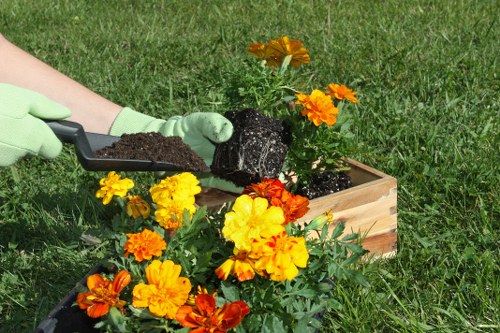 Where children, pets, or passers-by may be present, extra vigilance is required. Landscaping Fulham teams must work carefully to avoid creating unnecessary risk to others.
In addition, environmental safety is part of our overall duty of care. Chemicals, fuels, and plant treatments must be stored and handled responsibly, with spills dealt with immediately. Waste should be separated and disposed of correctly. Whenever possible, we aim to reduce environmental impact by using efficient processes, maintaining equipment properly, and choosing safe methods that support sustainable outdoor work.
Incident Reporting and Emergency Response
All accidents, near misses, hazards, and unsafe conditions must be reported without delay. Early reporting helps prevent repeat incidents and supports effective investigation. Records should be kept of injuries, equipment failure, damage, and corrective action. This information is used to improve controls and strengthen future planning. No one should ignore a concern because it appears minor; small issues can become serious if left unresolved.
Emergency procedures must be known by all workers. These include what to do in the event of injury, fire, electric shock, chemical exposure, or severe weather. First-aid provisions should be appropriate to the size and nature of the project, and at least one competent person should be available where required. Access for emergency services must be maintained, and work should be paused if conditions become unsafe. 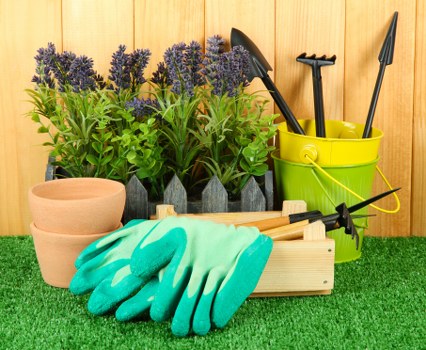 A calm and organised response can make a significant difference when an incident occurs.
We review this policy regularly to make sure it remains effective, practical, and up to date. Any changes in equipment, staffing, work methods, or legal expectations will be reflected in the policy and supporting procedures. Our aim is simple: to deliver professional landscaping services while protecting people, property, and the wider environment through consistent, careful, and well-managed safety practices.